Translate

Showing posts with label africa. Show all posts

Sunday, February 15, 2015

When the Flames Stop, Will the Lemba Rise?

Notes on the Future of the South African Lemba through the Lens of Problems Past and Present.

  As xenophobic rioting tears through Limpopo, little attention has been paid to the plight of the Lemba people there. The Limpopo region is home to many ethnic groups, among them the Lemba, wa-Remba or Senna depending on who names them. The name Lemba itself may denote a status as foreigners, as it is close to a Bantu word for foreigner. These "foreigners" came to Africa according to their own ancient legends confirmed by modern DNA research thousands of years ago from Israel. As the Jewish community is divided over who is really Jewish, the status of the Lemba is an open question. Many Reconstructionists and Reform Jews as well Kairites recognize patrilineal descent, and could therefore claim the Lembas who maintain their traditions are brother Jews. The Orthodox community, who only accept matrilineal Jewish descent, mostly see the Lemba as an interesting curiosity save those who have undergone formal conversion. Some Lemba who view themselves as Jews feel the reception by the larger Jewish community has in the past been "Jewish apartheid." “Jewish apartheid” were in fact the precise words the Lemba Cultural Association used to describe the situation as some years ago according to Gideon Shimona in his book, Community and Conscience: The Jews in Apartheid South Africa (2003).
  The role of apartheid in shaping the modern South African Lemba consciousness is large. One man of Lemba descent I spoke to recently noted that many Ashkenazi Jews had fought and struggled against apartheid. "Many of them fought and struggled, some went to prison... these are the Jews we should be looking up to." Many such Jews are still around.
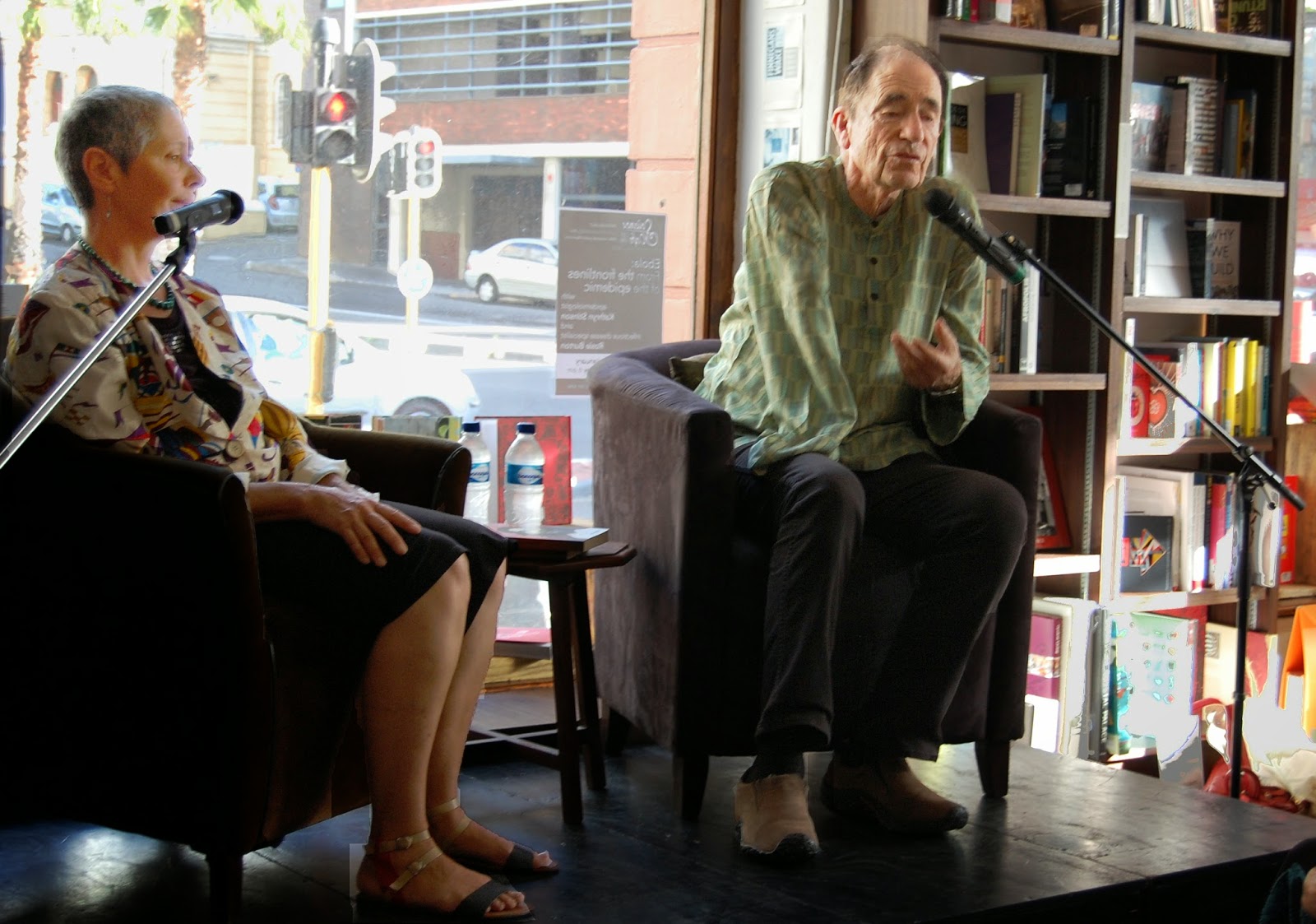
The above is a picture I took of  Justice Albie Sachs and Ruth Carneson last month at the Book Lounge in Cape Town. Both of these people made tremendous sacrifices in the fight against Apartheid. If you look closely you will notice the Justice lacks one arm. It was blown off in a personal attack against him during his fight with the Apartheid regime. Jews the whole world over can be justifiably proud of such leaders and perhaps not so coincidentally members of the tribe. 
Unfortunately for the Lemba and all of us, there were also many Jews who were implicitly supportive of Apartheid. The daughter I met of one mixed, although "white" family noted that her mother (a non-Jew) had been scared away from conversion by the pro-Apartheid politics of her husband's synagogue years ago. One can assume that many Lemba had the same issues. The history of the Lemba of South Africa cannot be divorced from that of Apartheid. This month marks the first African to be made a Saint by Catholicism. The saint, Benedict Daswa, was in fact a Lemba. His story and hundreds of others tell a fascinating and sad story of the role of Apartheid in the loss of Lemba identity. During Apartheid by and large the only community groups supporting the education of blacks were Christian missionaries. Lemba who wanted their children educated often had no choice but to send them to Christian schools. Among the results of Apartheid was a slow erasure of Lemba tradition.
  Today apartheid is over, but racism is not. During my travels in South Africa I met several Jewish "colored" people (people of mixed heritage) who had been isolated from Judaism through the workings of racism. One woman remarked to me that her family had converted to Christianity after years of keeping her and her younger sibling isolated from the larger community. This woman was the descendant of an Ashkenazi mother and a presumably black father she had never met. The woman was blunt in pointing out that she would not be accepted by the small community her mother came from or even all of her mother's relatives. Ironically her mother's family name was Schwartz (Yiddish for black). On the other hand many "colored" and black Jewish people have slowly integrated into South Africa's mainstream Jewish community. The numbers of "colored" Jews in South Africa are small but their dedication is fierce. In Cape Town one Shabbat morning I walked into a shiur in a progressive synagogue. I couldn't help noticing that all, by which I mean exactly 100%, of the attendants were "colored." The rabbi, Rabbi Newman who is in the midst of some academic research on the Lemba made a comment that perhaps we had found "the lost tribes of Israel right here!" Indeed, asking around about familial roots to such "colored" Jewish families one finds in some cases Lemba ancestry.
  Nonetheless, the majority of South African Lemba have taken on different identities from that of Jews. Their plight is important for the larger Jewish community to understand. Many Jews want their children to be Jewish, and grandchildren to be Jewish and so on. In understanding which traditions were transmitted among the Lemba and which were lost and why over the last thousands of years, we can gain insight into the future plight of all Jews. We can also gain insight into where the Lemba people are going. In all likelihood only through understanding the unfortunate aspects of past of the Lemba can any progress and healing be made. Like all Jews the Lemba are a people of very varied opinions. Some view their past as little more than a historical curiosity. Other Lemba view their past as an extremely important aspect of their identity which they view as undeniably Jewish. Some even seek to proselytize Judaism to other Lemba in an attempt to undo what they view as an unjust Christianizing of their people. One such Lemba is Oded Dumah, from the Lemba Hebrew Youth.  He envisions a future in which young Lemba in South Africa are taught Hebrew and Torah. Other Lemba have different visions of the tribe's future. To my knowledge although there is ongoing research into the Lemba, no one has undertaken a statistical ethnographic survey of such people as to their aspirations for the future. As apartheid fades into the past while democracy and global communication increase the possibilities for future Lemba exchange with broader global communities continues to increase.
  Unfortunately at this interesting moment in Lemba history a new problem has arisen. Xenophobic rioting has begun in several areas that are around the traditional homeland of the Lemba in South Africa. One local newspaper called the current situation as of two days ago an all-out tribal war. After speaking to both Lemba and non-Lemba Venda from the region, I can say the perception by most seems to be  that the Lemba are not truly foreign and will not be the specific target of violence. The Lemba will however have to live with the aftermath of the current violence even in the best case scenario. Many, many schools in their traditional region have been burned by rioters. Although many Lemba do not live in these areas the school burnings will effect some of their children, as a common pattern is for children to stay with their grandparents while young adults leave for cities to work. Other Lemba who have migrated from Zimbabwe are at risk of being attacked not due to their specific tribal identity, but because of nationality. As the situation develops, the broader Jewish community must ask itself "What is our responsibility to these people?" Ultimately, perhaps after this tragedy, the rebuilding of schools and education can be done by all kinds of people. We must not forget the unfortunate symbiotic roles of mainstream South African Jewish indifference, Christian religious missionary education and Apartheid in erasing Lemba culture. Educations both devoid of religious character and in every religious tradition can be made available after schools are rebuilt. We can all support a modern world, in which we can all be able to choose our identity and that of our children.

Candace Makeda Moore, February 15, 2015; Johannesburg, South Africa.

Monday, February 2, 2015

Fashionably Black? Not in Africa.

  I have no idea why but recently I have been spending time with more and more fashion models. I never would have consciously chose this as a chubby black woman. In fact I would have imagined it the third circle of hell in Dante's schema; where I would be forever punished for my gluttony and over consumption of food by listening to vain women who eat ice all day. But Cape Town is crawling with beautiful tall skinny women of every ethnic background, and low cost locations; so it is here many global brands do photo shoots. In fact I have come to realize many brands that seem to play on a sense of Americana or Britishness actually have their brand identity produced in Africa where it is easier and cheaper. The result can make some photo shoots look pretty comical. Out of nowhere in the middle of Africa, a group of freakishly tall white women appear. Mostly blonds. One could wonder why brand producers came to Cape Town to find models who clearly look like they came from Copenhagen.
  There is some local "talent" (to the extent that smiling in front of a camera can be called talent) in modelling. Overall in the industry these women are viewed as inferior. The one I have spent the most time with comes from another African country. She is 6 feet tall, a beautiful ebony color and has thighs about the size of my arms. Whenever she runs into people in her industry they chastise her for being too fat this season. "I'm the fattest model in Africa!" this woman has told me. By comparison I am a hippopotamus, and mind you I'm still inside what is medically considered a normal, not overweight range of BMI. Another black African model has told me that she is considered ugly, but that is good because at least it's interesting. I was fascinated by the trials and tribulations of these "ugly" models. I asked a lot of questions. Basically what I figured out pretty quickly was that any model who didn't look like an Aryan was of questionable beauty.
   None of this nonsense of whites being projected onto our collective imagination as superior is particularly new or unusual except that it happens in Africa. Local tastes are pretty varied, but big girls walk with a lot of pride. I often see obviously overweight women coming down the street dressed and walking with such obvious and attractive confidence it surprises me.  Africans remind me of middle Eastern people in their taste for women. There is a certain combination of nostalgia and sexual attraction for the chubby woman with black hair. I was able to do much better as a belly dancer in the middle east than I ever could have in the USA, and not because I changed in talent level.
  In Africa where all kinds of beauty are appreciated one very foreign mold has come to be seen as the ultimate model in advertising. Fashion and ads are about fantasy. And who would ever fantasize of looking like me and by extension having a totally banal life? A woman who looks like me works and struggles. Theoretically a woman who is skinny and blond plays on her family estate all day ordering around darker servants.
  South Africa has some kind of racial hiring quota system but it has skipped right over fashion and more broadly advertising somehow. But advertising dictates the psychological fantasies and dreams of the masses. If you walk into any local African store selling soap here you will notice lightening soap on sale, as if lightening one skin will deeply alter one's life. Perhaps it will. But it is deeply ironic that in RSA, a country ruled by those ostensibly dedicated to black empowerment in terms of economic reality, has no stance on black empowerment in terms of group psychology. The compromise seems to be that although black and brown people are now allowed to enter any profession outside of those about projecting an image; the image of whites as ideal will never be seriously challenged.

 In a funny ironic note, those who work most closely with projecting images of fashionable whiteness may be the most tired of it. Several local photographers here have taken pictures of me as if I'm some sort of muse...and in ways that emphasize my 'ethnicness' and em, substantially full body...go figure!


Tuesday, January 20, 2015

Abortion, AIDS and Feminism

   All over the inside of third class trains in south Africa are signs and stickers for abortion. They outnumber every other kind of sign, although signs for penis enlargement are a close second. There are huge numbers of babies aborted, and babies born and abandoned. Obviously the reasons for this are complex. People generally know where babies come from in the modern world, so this probably is less about condum availability than anyone would guess. After all in South Africa you can get free condums all over the main cities. I would venture to guess that what this is partly about is the economy and how it effects genders differently.
  Many men here would get a woman pregnant and run. Paradoxically, that seems to make women all the more eager to engage with them. These women want these men not because they are 'bad boys' (a pereinnial turn on for a certain percentage of the population, pun intended) but because they are even boys. The lack of decent men seems to turn some women into push-over sluts willing to do anything to accommodate one. Sadly I was reminded of African-American women. I remember years ago, in medical school, I asked my little sister an epidemiology student why black women were the new epicenter of the HIV epidemic. She replied quite simply "Less condum usage. If you wanted to get a man in those communities you would probably have to sleep with him without a condum." The idea being of course, if you would not, there is some other woman who will, and then pay for her own abortion on top of that.
  Issues like this make a mockery of the idiotic debate ongoing about whether feminism is anti-male. The world would be a lot better place if we had more condum usage because it would mean less HIV , unwanted AIDS babies and abortions for starters. Even after everything my calloused eyes have seen, looking at hospital ward after hospital ward of abandoned AIDS babies in Africa was overwhelming. Is this the world either sex wants to live in? Empowering one sex or gender isn't about disempowering the other one.

Sunday, January 18, 2015

The African Minstrel Show: Kaapse Klopse 2015


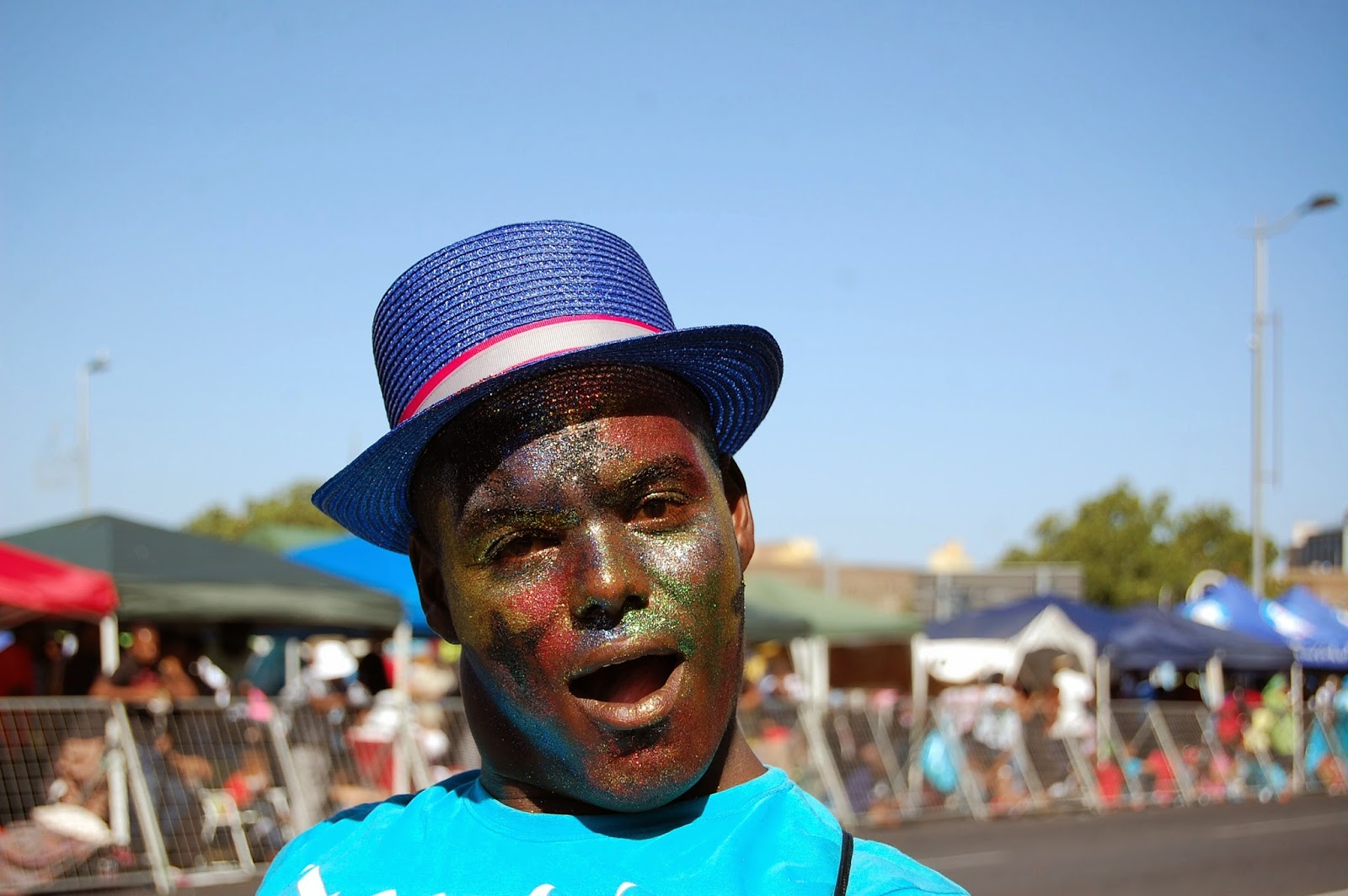
Kaapse Klopse or Coon Carnival, as it used to be called is one of the most interesting examples of the global reach of African-American culture I have seen. The carnival's roots draw on both the performances of real African-Americans who came to the Cape, and of white folks in blackface doing minstrel shows. Truth be told I only saw colored folks doing white-face, and even white -head yesterday ; not the other way around. Whatever the case, masks seem to help people reveal hidden sides of themselves.
 

Sunday, December 28, 2014

A New Business from Poverty: Voluntourism

  Apparently poverty is a business like any other. It might not be very profitable for those who have to suffer through it; but there is still money to be made. For decades many people have known about those who skim off of money meant for charity. But now as the number of poor people around seems to expand since the financial crisis of 2007, business leaders have found more and more ways to make a buck off of those without one. These practices are all along the food chain from mom-and-pop businesses right up to the financial titans that run the world.
  At the top you can consider the big bank JPMorgan. Since the crisis they have made billions of the financial service of food stamps for Americans. Literally billions each year were made off of American people who couldn't afford to feed themselves. As to this windfall improving things for American workers...well not so much. A lot of the jobs from these types of project are done by low wage workers in India.
  If one carefully considers every step and product involved in the process of this service, it is apparent that it is not only poverty servicing but poverty creating. Yet from the crude oil that made the plastic that food stamp recipients have in their cards, down to the cash registers ringing them up at the grocery store there is production and profit. In most steps globalism has worked like a curtain to separate the two...and many sides involved are ignorant of the full picture. Food stamps are just a particularly interesting case study, and perhaps even a positive on one balance.
  Ignorance of how globalization works for most involved is psychologically easier. As long as each person involved in production is isolated from a larger picture, they can feel that what they are doing is morally neutral. The business class claims workers are not in fact ignorant, and they could work at something else if they ever had objections: they assume democracy and freedom. But the appearance of democracy is maintained by a dictatorship of ignorance. With enough manipulation people can even become ignorant of what is right in front of their faces every day. In this world of easy ignorance I am impressed by the number of relatively privileged young people I meet who want to do something to make the world a better place or at least understand what the heck really goes on. Unfortunately, their impulses are often hijacked by an ever expanding industry that profits off misery in quite a different way than JPMorgan.
  Thousands of young privileged folk fan out from the first world all over the globe to volunteer. A few commit to doing substantial work with reputable organizations like Peace Corps. Others, perhaps guilty about their ability to take lavish vacations look for shorter projects. An entire industry has sprung up around these sometimes naive younger folks. Not every young person is naive. Many pay to volunteer as a way to pad their resumes or education applications. In the case of such self aggrandizing volunteers, they are fully aware they are paying for a service. But what of the volunteer who actually sought to make the world a better place? They will likely experience anger and frustration. They may in fact be scared away from ever reaching out again.
  More and more voluntourist organizations seem to be operating with less and less concern for any actual poor people. Over my time in Africa I met many young Westerners who had been sucked into the schemes of such organizations only to realize that they themselves were one of the mechanisms through which such organizations profit. Not only are poor children used for profit as they become living advertising jingles to milk donations from wealthy donors, but middle class Western kids are used for profit as well. One woman I spoke to volunteered in a Township in South Africa. She paid an embarrassing amount supposedly for her own accommodation, and improvement of the local school. When she got there her accommodations were so poor she privately paid upgrade her situation by joining a backpackers hostel nearby. The children at the local school didn't even get soap in the bathrooms and neither did she. When she made some off the cuff calculations on how much money the organization made per volunteer she was astounded. She furiously decided to trail the money, but hit a wall of silence. She was informed that the organization did not have to disclose any financial information to the public including it's volunteers. In spite of misleading information she had received, the organization was in fact for profit, and therefore supposedly had every right to make as much profit as possible...even if it meant keeping a local African school as decrepit as possible presumably to inspire even more donations.
  Another volunteer I met stayed at the accommodations his organization provided him. he described it as a four bedroom house holding 25 volunteers who all paid to be there. There was no security, and given the presumable demographics of the group it isn't surprising that the place was the target of frequent break-ins. The man mentioned that no one who worked for the organization actually stayed there. The resident volunteers were really being robbed twice over: by the local thieves, and also by the organization they worked for. He was like many young volunteers naive. He found out about the opportunity over the internet. Without having set foot in Africa he had set up an experience for himself there. But if he had simply set foot in Africa he might have saved himself a lot of trouble. There is a genuine need in Africa, just as in the USA for volunteers. It's impossible not to find people who could use some help. It's heartbreaking. I considered putting a picture of myself sharing my birthday party with some orphans in here, but then I realized I didn't want to publish up a picture of these kids being served food by me. No one needs to know they were hungry orphans for ever and ever verifiable by internet search engine. But voluntourist organizations have no such consideration for kids. Some even grab kids unknown to volunteers for photo-ops.
  Not every voluntourist is convinced of their own benevolence...but few seem to understand all the ways that they are feeding a for-profit machine. Charity gives the facade of redemption to the cruelest forms of globalized capitalism. Westerners are encouraged to see themselves as saviors of the world's poor as opposed to the ones who perpetrate a system that impoverishes them. It's an easy sell. In looking at situations of conflict almost all humans see themselves as victims or bystanders. Few understand themselves as the perpetrators of any problem. Oddly though, many people see a good deed done by anything less than pure altruism as so tainted by bad intentions as to be negative. I submit this blog to the world in the hopes of exposing the less than altruistic reasons behind many voluntourist organizations...I hope young people find other ways to volunteer.